Control microbiological contamination in flavor production
Natural raw materials can introduce soil, dust and microorganisms during flavor production. Ingredients and liquids added after extraction can create additional sources of contamination. Some microorganisms may not be controlled by heat during manufacturing, making an effective filtration strategy important.
Thermoacidophilic bacteria (TAB) are of particular concern because they can affect product odor and taste. In apple juice, for example, spoilage may appear as light cloudiness or haze and may produce medicinal, phenolic, disinfectant-like or smoky off-odors. Guaiacol is the predominant metabolite associated with this off-odor, while studies also report halophenolic compounds including 2,6-dibromophenol and 2,6-dichlorophenol.
A staged filtration process can help remove TAB bacteria and spores when heat is not an effective inactivation method.

Build a staged filtration process
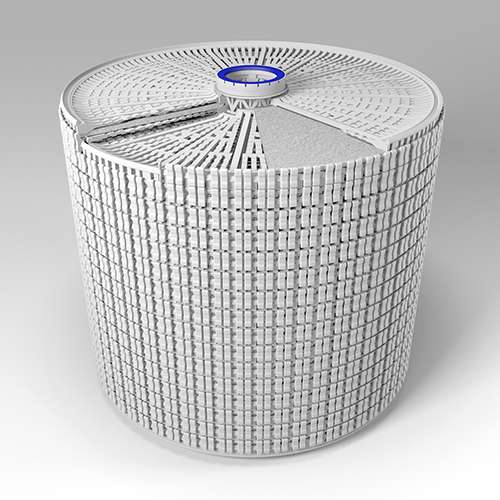
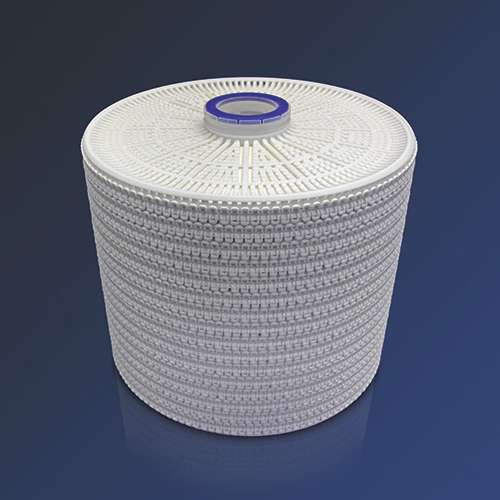
Depth sheet filters are the approved method for removing microorganisms and TAB. Because flavor processing requires enclosed filter systems, SUPRAdisc II modules are the lead solution for removing microbiological contaminants and TAB from flavors, used with a membrane cartridge as the final filter before packaging.
Classic stacked disc modules can be vulnerable during shipping, handling, installation and removal. High-temperature operations, including hot water sanitization, steaming and hot filtration, can also deform exposed depth media. SUPRAdisc II modules address these limitations with upstream and downstream media support, a polypropylene cage, a Clip-Seal Interlock and a welded separator design.
Choose the appropriate filtration products


How to remove microorganisms and TAB from flavors
Use a staged filtration process to address microbiological contamination before packaging:
- Use depth sheet filtration as the primary step to remove microorganisms, TAB bacteria and spores.
- Use an enclosed SUPRAdisc II module where the flavor process requires an enclosed filter system.
- Add a membrane cartridge as the final filter before packaging.
Frequently Asked Questions
What causes microbiological contamination in flavor production?
Natural raw materials can introduce soil, dust and microorganisms. Ingredients, products and liquids added after extraction can create additional contamination points.
What are thermoacidophilic bacteria and why are they a concern?
Thermoacidophilic bacteria, or TAB, can affect product odor and taste. In apple juice, spoilage may appear as light cloudiness or haze and can produce medicinal, phenolic, disinfectant-like or smoky off-odors associated primarily with guaiacol.
Can heat remove TAB from flavors?
Heat is not the solution for inactivating TAB in this application. An effective filtration process is required to remove TAB bacteria and spores.
What filtration process removes microorganisms and TAB from flavors?
Depth sheet filters are the approved method for removing microorganisms and TAB. For enclosed flavor processing systems, SUPRAdisc II modules are the lead solution when combined with a membrane cartridge as the final filter before packaging.
Why use SUPRAdisc II modules instead of classic stacked disc modules?
Classic stacked disc modules can be compromised during shipping, handling, installation and removal. High-temperature operations can deform exposed depth media. SUPRAdisc II modules support the media upstream and downstream, seal it inside a polypropylene cage and use a Clip-Seal Interlock with a welded separator design.
Which Pall filtration products support microbiological contaminant removal from flavors?
The product pathway includes SUPRAdisc X-Series depth filter modules, SUPRAdisc II stacked disc depth filter modules, Seitz K-Series depth filter sheets, Seitz ZD Series depth filter sheets and Fluorodyne II membrane filter cartridges.
Explore related flavor filtration steps
Microbiological control is one part of the flavor filtration journey. Explore the stages that may come before or alongside final microorganism removal.
Plan the next filtration step
Share your raw materials, process conditions, target microorganisms and final filtration requirements with a Pall specialist to help identify the appropriate filtration approach for your flavor application. Talk to a flavor filtration specialist by filling the form below.
Talk to a flavor filtration specialist